29 august 2026 · düsseldorf
DialDash
A dial on the desk that shows everything I would otherwise unlock the Mac for, including, in real time, me using Claude.
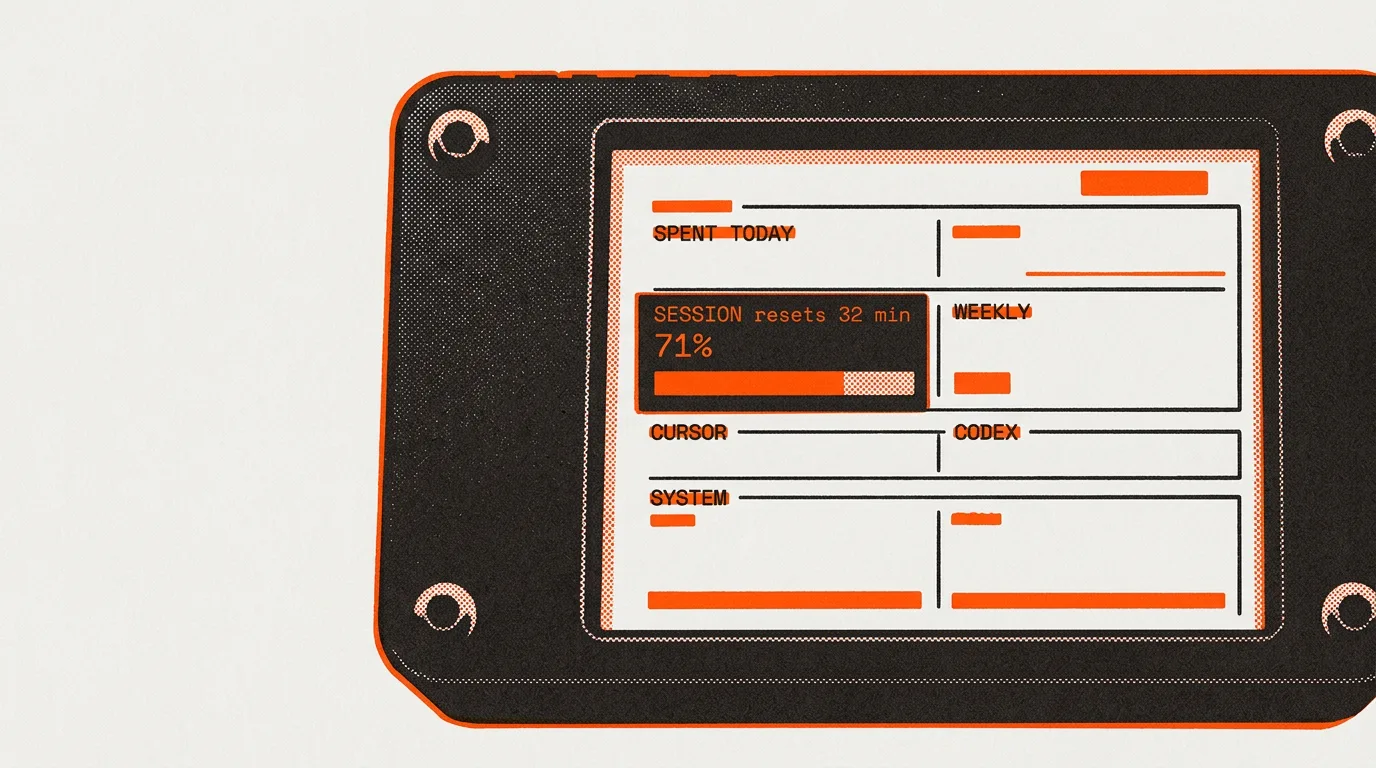
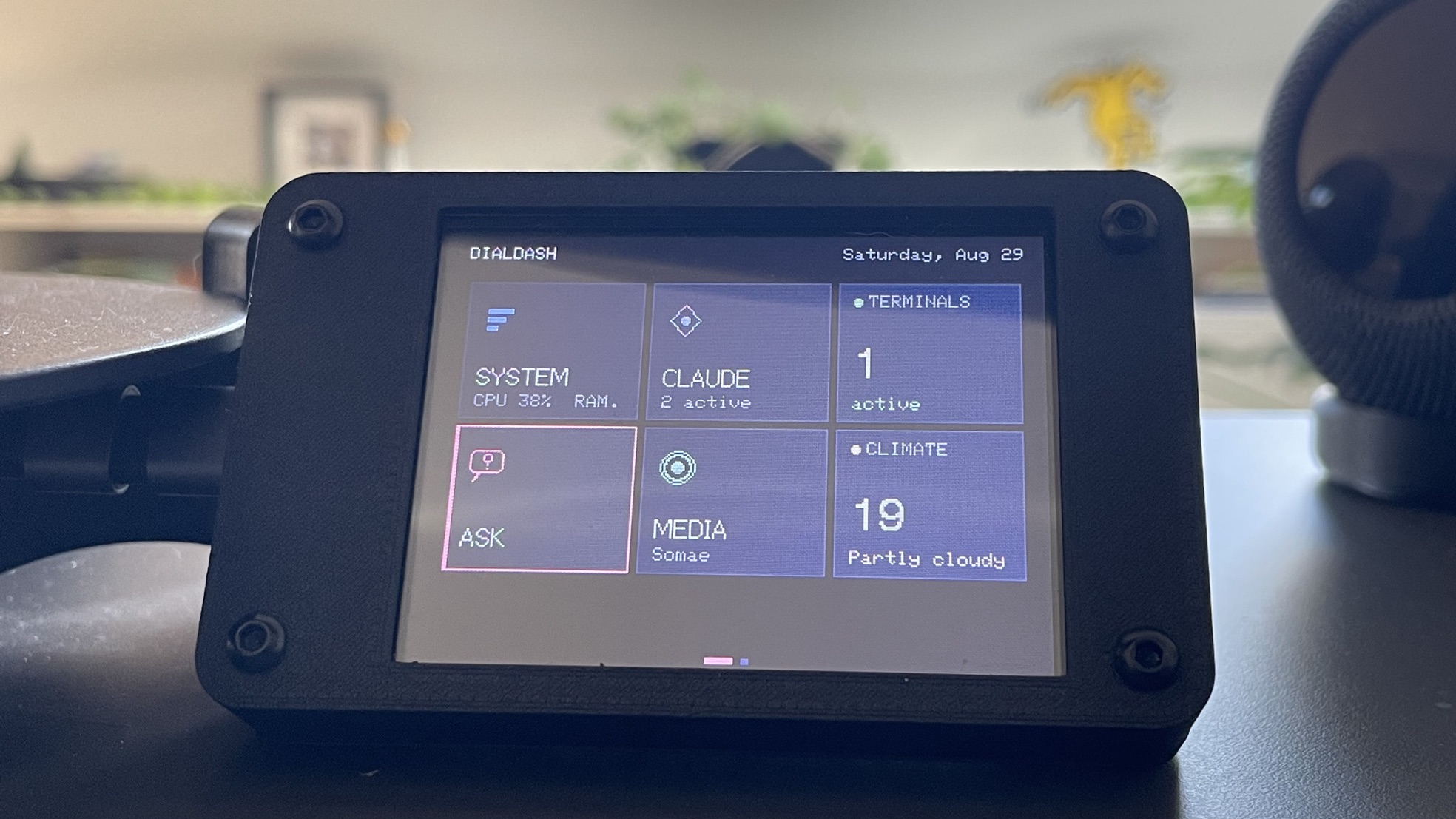
DialDash is a small touchscreen with a rotary dial, tipped on its side at the edge of the desk. The board is a Cheap Yellow Display, a ten-euro hobby board with a 2.4 inch screen. It runs a dozen apps from a single Arduino sketch, and everything it knows arrives over one USB cable.
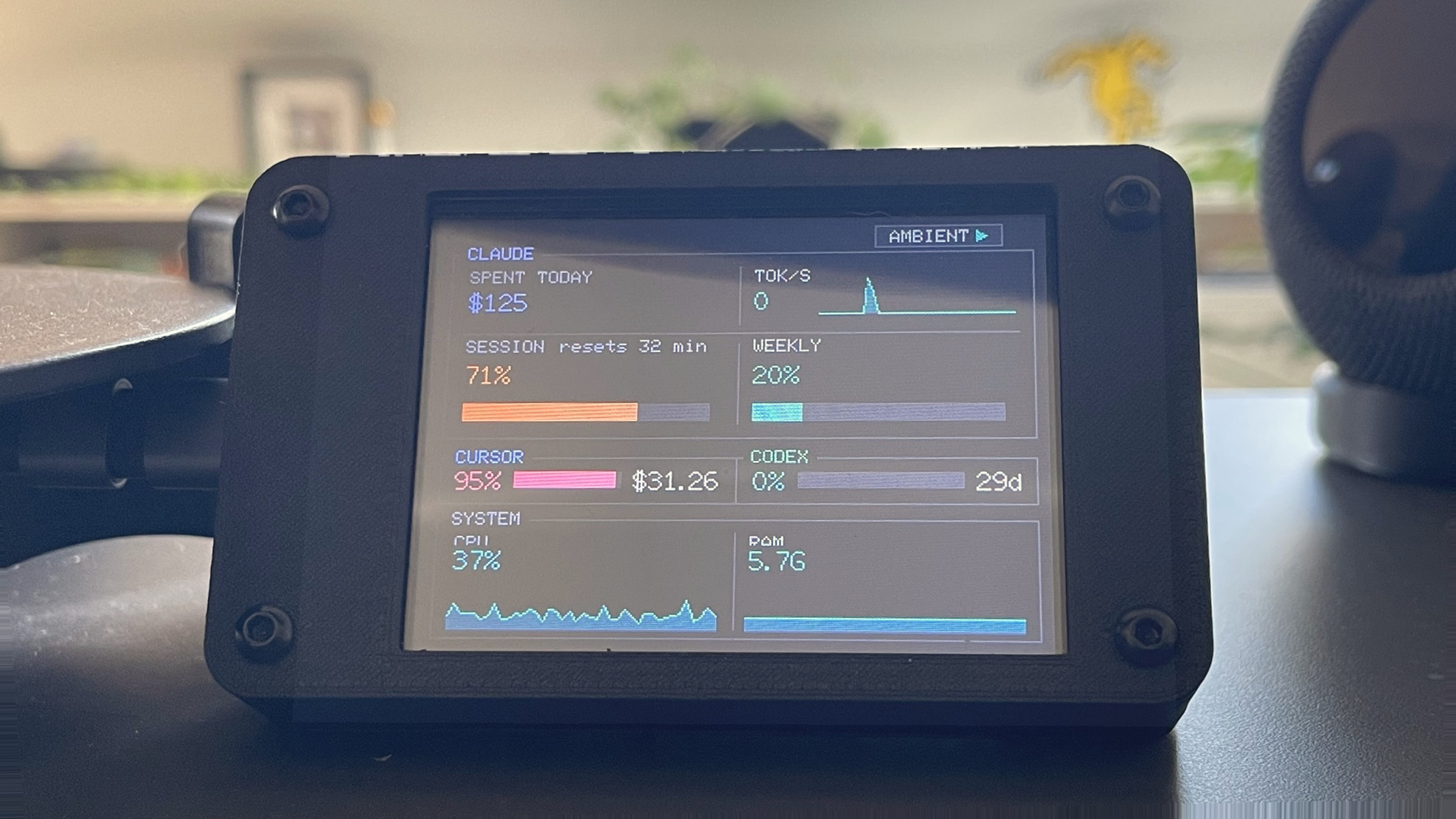
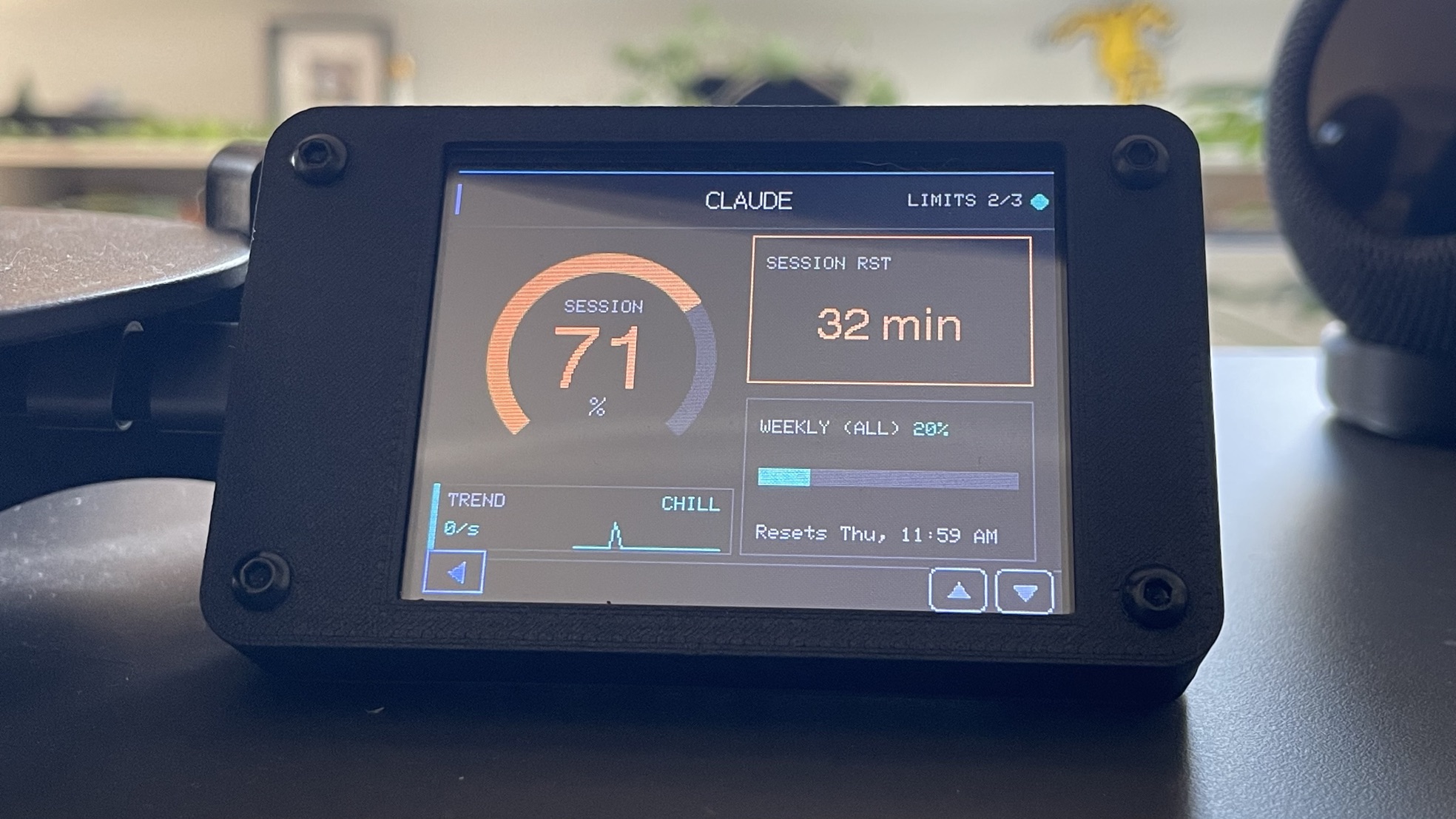
The screen I look at most is a meter of me using Claude, tokens per second. Three thousand tokens a second reads fully red. It is the most on-the-nose thing I have built, a device whose favorite subject is its owner using the tool that built it.
None of that is how it started. It started as games.
Born as a toy
Day one, 17 April 2026, is seven commits. A launcher, four games and live album playback, before the board had a name.
The games were real games. Safe Cracker has you dial in secret digits against a countdown, with a heat meter that climbs from COLD through BURNING to BULLSEYE.
Then it ate the desk
Three days later the Mac side learned to carry any number of apps down the one cable at once. Once a feed was that cheap, everything I glance at became one. The Mac's own vitals went up that day, and weather and Lebanon news beside them.
On 21 April, day five, the first Claude app put the day's token count and cost on the device. A WhatsApp glance landed at the end of the month, the unread count and who it was from.
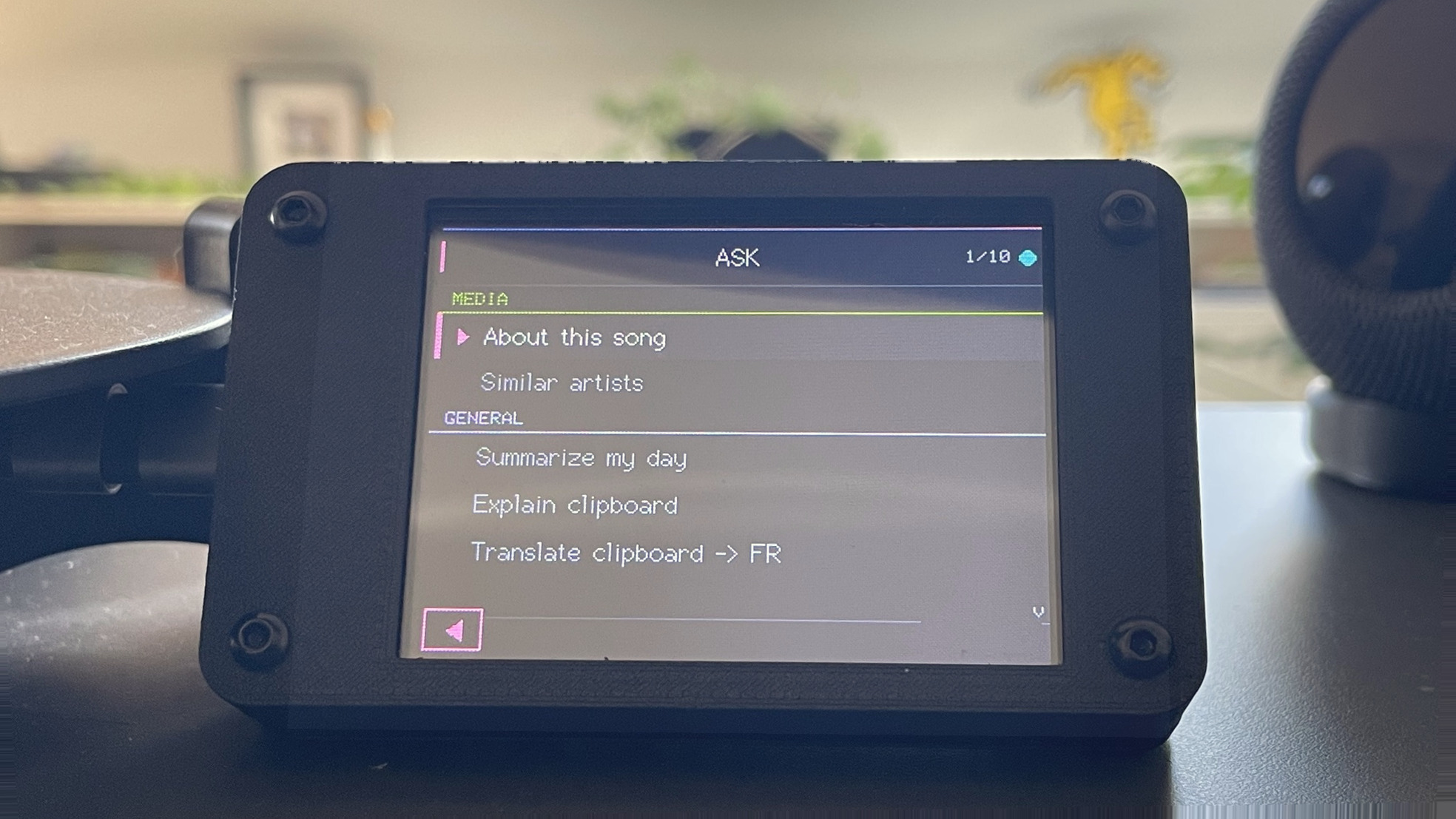
On 30 April it got Quick-Ask, ten preset prompts sent to a model with my own context injected. "What should I work on now?" tells the model to give exactly one concrete next action, then "No alternatives, pick a side." The German-word preset prefers Fernweh and Backpfeifengesicht over basic vocab.
On 1 May, day fifteen, a cyclist companion shipped in the morning with pre-ride weather and ride history read from Apple Health, plus an e-bike charge tracker that was cut again by evening.
The meter
The Claude app from day five grew into the deepest thing on the device. Running sessions report themselves as they work, so an activity page shows each one as a card with its own state. When a session actually needs a decision from me the banner says NEEDS YOU.
In late August 2026 the history page read $1,904 over the last seven days, about $272 a day, and $13,457 since April.
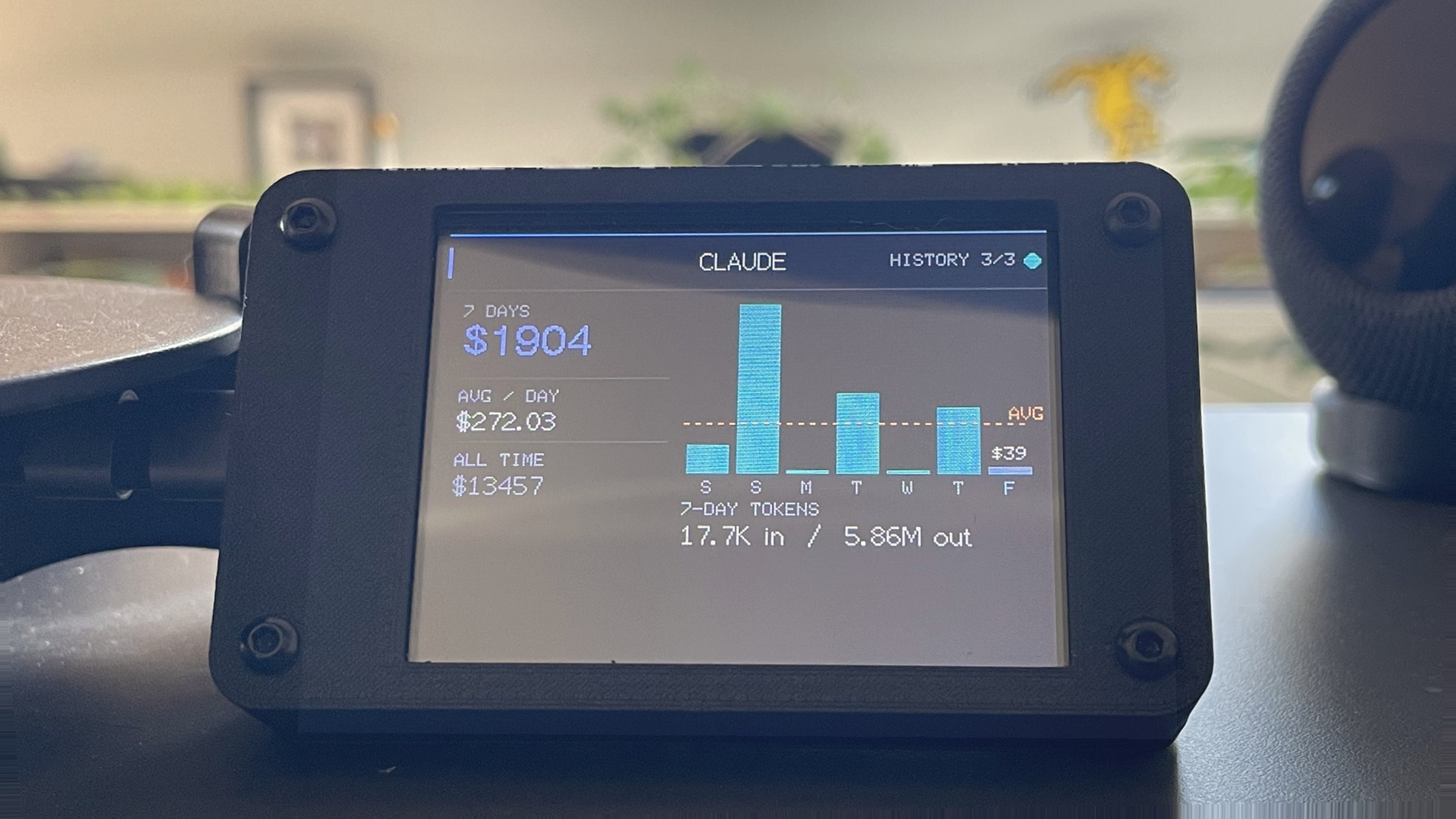
The number I watch is one page back.
The answer to "what do I do now" has to be obvious from across the room. So the gauge stops being a gauge once the five-hour usage window has run all the way out. A WAKE button replaces it, and tapping it pokes a session awake on the Mac.
One question per screen
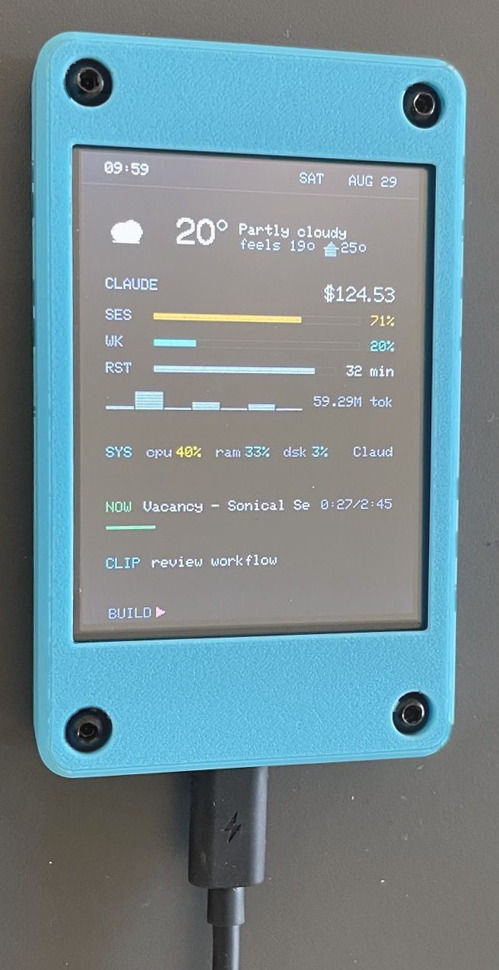
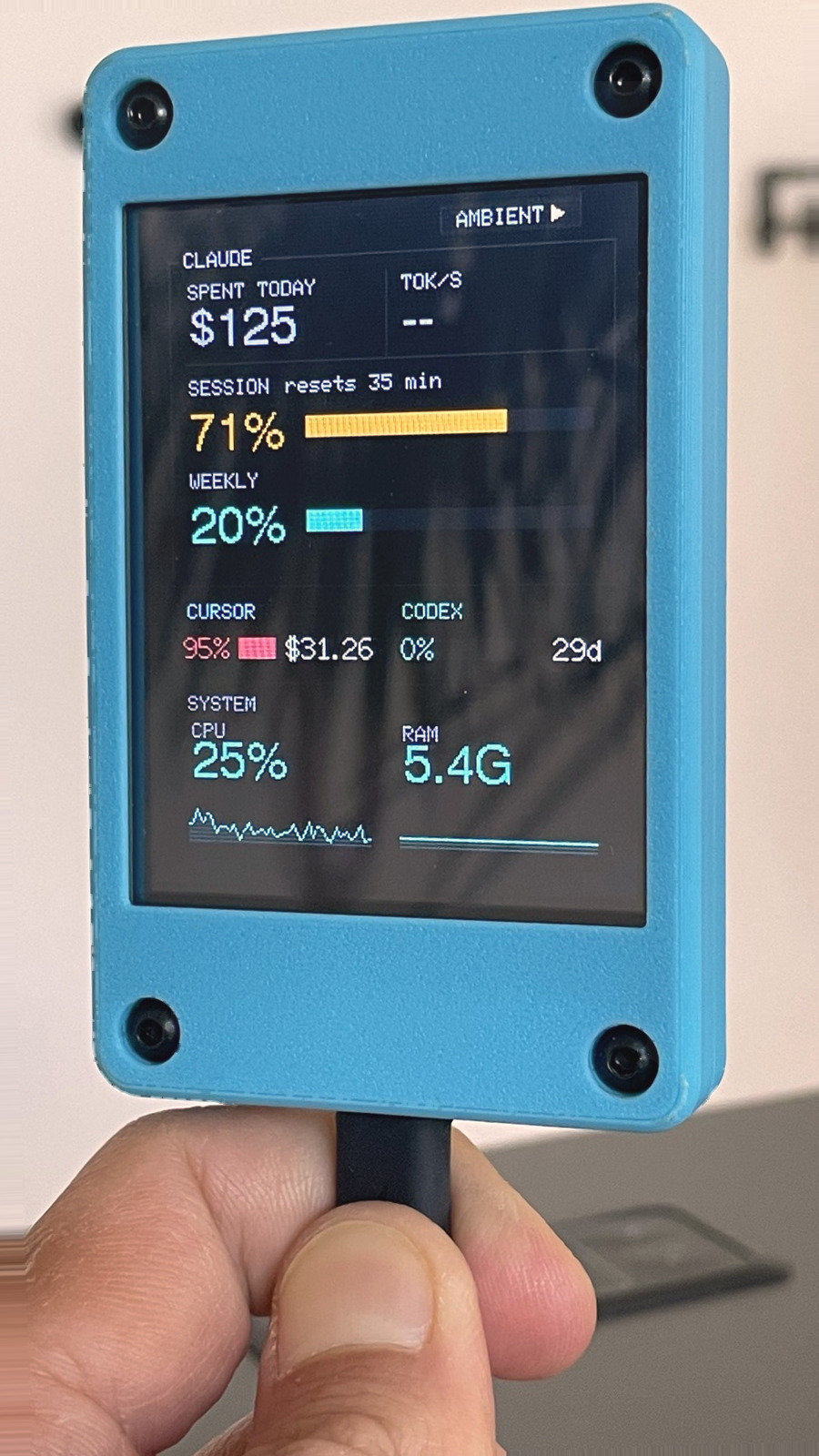
The four system pages were drawn as web pages first and rebuilt on the device after. Each one gets one question to answer. Is my Mac healthy. Is the pipe full. What did I just copy. Let me twist a thing.
That last page belongs to the dial, which is the control I use without looking.
One cable
A program on the Mac does the fetching. It polls everything and streams it down the cable.
The Arabic lyrics needed a font that did not exist, so the music app got one generated for it and then repaired by hand.
The house moves in
The speakers, the bulbs and the music controls had been on the board since April, each speaking its own reverse-engineered protocol.
On 13 August a spec ended that. Music and lights are moving onto the house-wide Home Assistant install. A flapping speaker once wrote a 243GB log and filled the disk. The trade is one sentence, "One integration point replaces three protocol stacks".
The new pages are merged and live. The speakers they can reach are the house's. Kitchen, bedroom, shed, and Krystel's MacBook Pro, which drops off the list when it is offline.
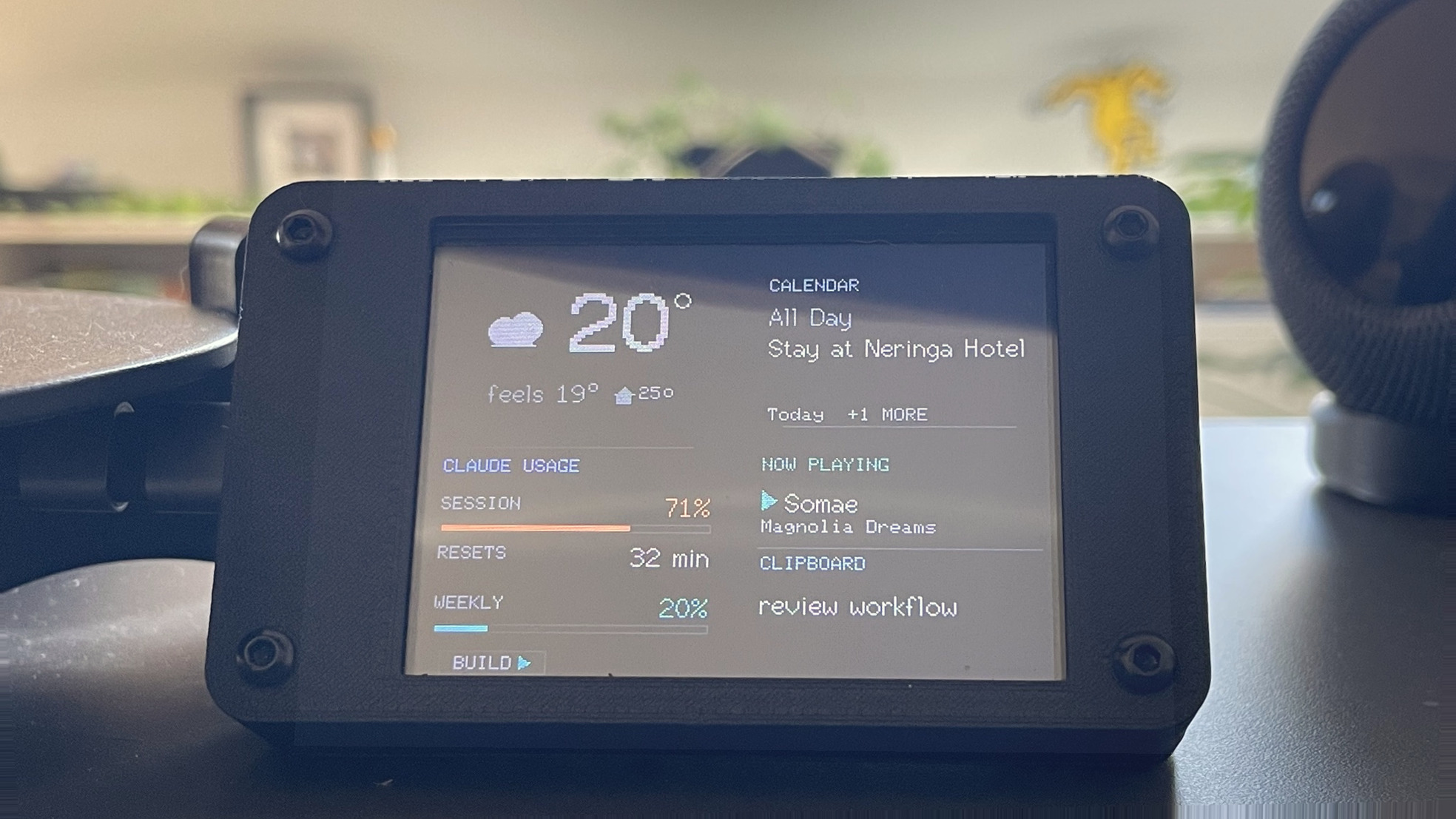
Still on the desk
As of 29 August 2026 the dial runs all day, and the latest commits are house-sized. The open question I have written down is the Claude side itself, four screens with drill-ins, approaching the limit of what fits on a screen this small.